When a branch needs more leverage
Choose for the wood, the diameter and the room to open the handles.
Compare the tools
Choose for the wood, the diameter and the room to open the handles.
Compare the tools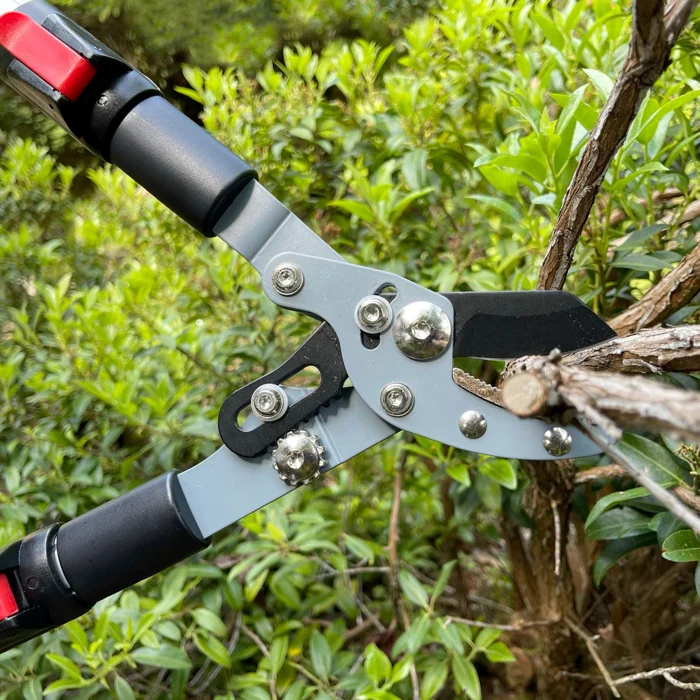
A bypass lopper suits live growth. An anvil lopper supports hard or dead wood against a fixed surface as the blade closes.
Choose a tool rated for the branch. Check the cut capacity printed on the tool or its packaging.
A compound linkage increases the force at the blades as you close the handles. A ratchet cuts in stages, advancing the blade with each squeeze. Check the cut capacity of the individual tool.
Longer handles can reach farther into a shrub. Check that you have room to open them fully. For thicker branches, use an appropriate pruning saw.
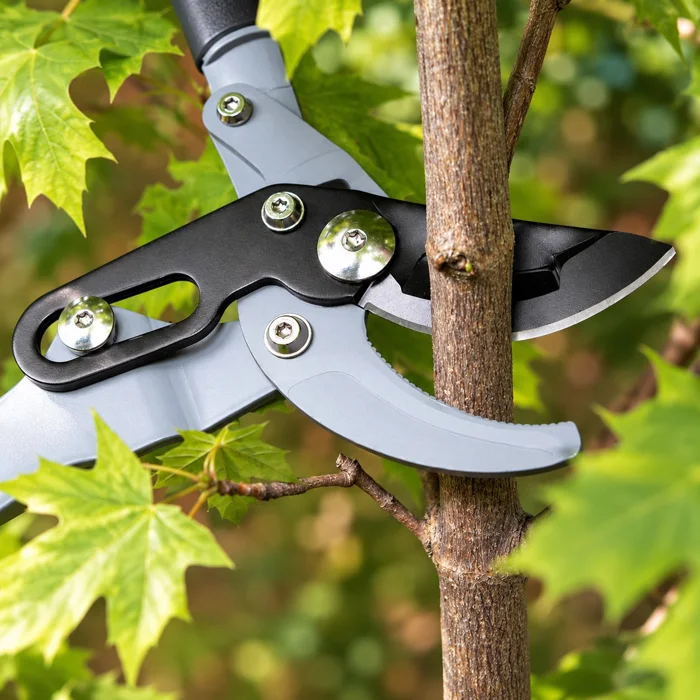
The DP624 uses a compound bypass action to cut green wood.
The DP941 has a geared anvil action and telescopic handles. Allow room to open them.
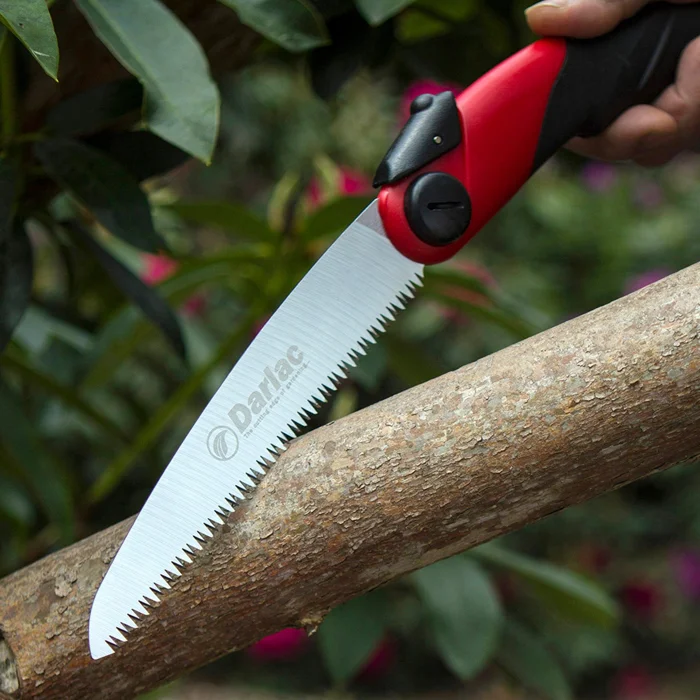
A folding 21 cm blade cuts on the backstroke and locks open for use.